
Is the Summer Heat Causing Foundation Problems in Your Kansas City Home?
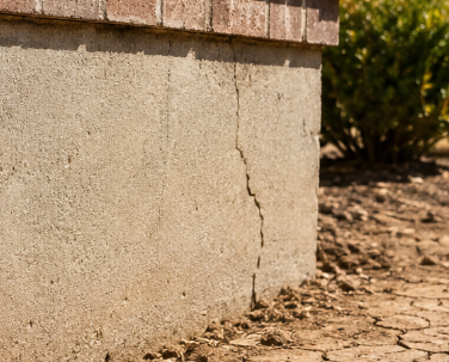
Kansas City homeowners are no strangers to hot, dry summers. While high temperatures can make your home uncomfortable, prolonged heat and dry weather can also affect the soil supporting your foundation. This is especially important in the Kansas City area, where many homes are built on clay-rich soils. Clay soil expands when it absorbs moisture and contracts as it dries. During an extended dry spell, these changes can contribute to movement around a home's foundation.
If you've recently noticed new cracks, sticking doors, uneven floors, or gaps around windows, you may wonder whether the summer heat is contributing to the problem. These issues can contribute to foundation issues but seasonal movement does not automatically mean your foundation is failing.
How Hot, Dry Weather Affects Your Foundation
During prolonged hot, dry weather:
Moisture is lost from the soil.
Clay soil contracts or shrinks.
Soil conditions around the foundation can change.
Different areas of the home may experience different amounts of movement.
When soil conditions change unevenly beneath a home, the foundation and framing above it may experience movement. Sometimes this movement is minor and seasonal. In other cases, it can create noticeable changes throughout the home.
Warning Signs to Watch For
A single crack or sticking door does not automatically indicate a foundation problem. However, homeowners should pay closer attention when multiple symptoms appear or existing problems begin to worsen.
New or Worsening Cracks
Watch for:
New drywall or plaster cracks.
Cracks around doors and windows.
Cracks at wall corners.
Cracks that appear to be widening.
Multiple new cracks throughout the home.
Cracks in basement or foundation walls.
Not every crack is structural. The location, size, orientation, and progression of a crack are generally more important than the crack itself.
Doors That Begin Sticking
If doors that previously operated normally suddenly become difficult to open or close, take note. Look for:
Doors rubbing against their frames.
Doors that won't latch properly.
Doors that swing open or closed on their own.
Several doors changing at approximately the same time.
One sticking door may have an isolated cause, but multiple doors changing together may warrant further investigation.
Uneven Floors
Homeowners may notice:
Floors that feel noticeably sloped.
Furniture that rocks.
Objects rolling in the same direction.
New gaps underneath furniture.
Uneven floors can have many causes, so they should be considered alongside other symptoms rather than treated as proof of foundation movement.
Gaps Around Windows and Doors
Pay attention to:
New gaps between trim and drywall.
Changes in existing gaps.
Windows becoming difficult to operate.
Changes in how doors fit within their openings.
These conditions don't necessarily mean there is a foundation problem, but they become more significant when combined with other signs of movement.
When Should Seasonal Movement Be Monitored?
Some amount of seasonal movement is expected in many Kansas City homes. Soil moisture naturally changes throughout the year, and homes can respond to those changes. If you notice a small, isolated crack with no other symptoms, monitoring may be appropriate.
Homeowners can:
Take photographs of the condition.
Record the location and date.
Check the area periodically.
Compare conditions before and after significant weather changes.
The goal is to determine whether the condition is stable or progressively changing. A small crack that remains unchanged may not require immediate action. A crack that continues to widen or is accompanied by other changes deserves more attention.
When Should You Call a Structural Engineer?
Consider contacting a residential structural engineer if you notice:
Cracks that are progressively getting larger.
Multiple new cracks appearing.
Significant changes in doors or windows.
Noticeably uneven floors.
Significant separation between walls, ceilings, floors, or trim.
Cracking or movement of foundation walls.
Several symptoms occurring at the same time.
Conditions that continue to worsen.
A structural engineer can evaluate the overall pattern of movement rather than focusing on a single crack. This is important because not every foundation crack requires repair. Before spending thousands of dollars on foundation repairs, it can be worthwhile to determine what is actually causing the movement and whether corrective action is necessary.
Pay Attention to Landscaping
Large trees and vegetation can influence soil moisture around a home. Pay particular attention to large trees growing close to the foundation. Avoid making major changes to landscaping, grading, drainage, or watering practices without understanding how those changes could affect the soil around your foundation.
Should You Water Around Your Foundation?
During prolonged hot and dry weather, homeowners may wonder whether they should water the soil around their foundation. In some situations, maintaining relatively consistent soil moisture can help reduce the extreme drying and shrinking that can occur in clay soils.
If you choose to water around your foundation:
Use a soaker hose or low-flow method rather than heavy irrigation.
Apply water gradually rather than flooding the soil.
Focus on maintaining relatively consistent moisture conditions.
Avoid creating standing water next to the foundation.
Do not direct large amounts of water against the foundation wall.
Be especially cautious around basement walls, crawl spaces, and areas with drainage concerns.
Excessive watering can create its own problems by increasing hydrostatic pressure, contributing to drainage issues, or causing the soil to expand rapidly.
If your home has already experienced significant foundation movement, it's a good idea to consult with a residential structural engineer before making major changes to your watering or drainage practices. A professional can help determine whether maintaining soil moisture is appropriate for your particular foundation and site conditions.
Don't Panic, But Don't Ignore Changes
Kansas City homes are built in an environment where seasonal soil movement is a reality. Hot, dry summers can cause clay soils to contract, while significant rainfall can cause them to expand again. That doesn't mean every crack or sticking door indicates a failing foundation. Instead, pay attention to new symptoms, progressive changes, and multiple symptoms occurring together.
If you notice a small, isolated crack, monitoring it may be appropriate. But if you're seeing new cracks, sticking doors, uneven floors, gaps around windows, or visible foundation movement, it may be worthwhile to have the conditions evaluated by a residential structural engineer such as Resolve Engineering. Understanding what's happening with your home before pursuing repairs can help you make an informed decision and potentially prevent you from spending money on unnecessary repairs. Contact Resolve Engineering or fill out our Quick Booking Form to schedule your foundation inspection today.