
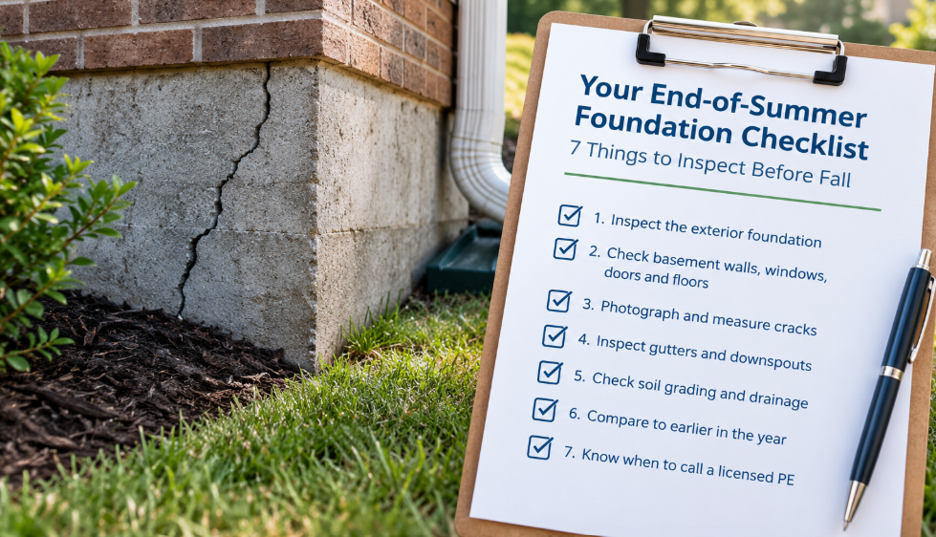
As summer comes to an end, it is a good time for Kansas City homeowners to take a closer look at their home's foundation. Hot, dry weather can cause the clay soils common throughout the area to shrink, while heavy rainfall can cause those same soils to expand. These seasonal changes can place stress on foundations and other parts of the home.
An end-of-summer inspection does not require specialized equipment. A simple walk around your home can help you identify changes, document potential concerns, and determine whether a professional evaluation is warranted.
Here are seven things I recommend checking before fall.
1. Inspect the Exterior Foundation
Walk around the entire exterior of your home and look closely at the exposed foundation, brick, and masonry. Watch for:
New or widening cracks
Stair-step cracks in masonry
Areas of bowing, leaning, or displacement
Separation between the foundation and other portions of the home
Not every crack indicates a structural problem. The location, size, pattern, and whether the crack is changing over time are all important factors.
2. Check Basement Walls, Windows, Doors, and Floors
The interior of your home can provide additional clues about foundation movement. Look for:
Cracks in basement foundation walls
Bowing or leaning walls
Signs of water intrusion
Cracks around windows or doors
Doors that are difficult to open or close
Sloping floors
Individually, these symptoms may have relatively simple explanations. However, multiple new symptoms occurring together may warrant further investigation.
3. Photograph and Measure Cracks
If you find cracks, document them rather than simply making a mental note. For significant cracks:
Take a clear photograph.
Include a ruler or measuring device when possible.
Record the approximate width and length.
Note the location and date.
Take another photograph later to compare changes.
Tracking cracks over time can be extremely useful. A crack that remains unchanged may be less concerning than one that is consistently widening or changing.
4. Inspect Gutters and Downspouts
Water management is one of the most important parts of maintaining a foundation. Before rains arrives, check that:
Gutters are clean and functioning properly.
Gutters are not leaking or overflowing.
Downspouts are connected and working properly.
Downspouts discharge water away from the foundation.
Water is not collecting next to the house.
Keeping roof runoff away from the foundation helps reduce unnecessary changes in soil moisture around your home.
5. Check Soil Grading and Drainage
Walk around the home and look at the soil immediately next to the foundation. Look for:
Low areas where water can collect
Soil that has settled next to the foundation
Erosion caused by roof runoff
Areas where water drains toward the house
Gaps that have developed between the soil and foundation
Kansas City's clay soils can shrink during prolonged hot and dry weather. Maintaining appropriate drainage and reasonably consistent soil moisture around the foundation can help minimize seasonal movement. Also consider whether landscaping, flower beds, patios, or sidewalks are directing water toward the house.
6. Compare Your Home to Earlier in the Year
One of the most useful things you can do is compare the condition of your home now with photographs and observations from earlier in the year. Ask yourself:
Have existing cracks become wider?
Are there new cracks?
Have doors or windows started sticking?
Has a floor become noticeably uneven?
Have gaps or separations appeared around the exterior?
Have basement walls changed?
Looking at the overall pattern is important. One small crack may not be significant, but several new symptoms appearing in the home could indicate a larger issue.
7. Know When to Call a Licensed Professional Engineer
Homeowners do not need to call a structural engineer every time they find a crack. However, certain conditions deserve a closer look by a licensed Professional Engineer (PE). Consider scheduling an evaluation with Resolve Engineering if you notice:
Horizontal foundation wall cracks
Significantly widening or displaced cracks
Bowing or leaning basement walls
Significant floor movement or changes in elevation
Stair-step masonry cracks with visible displacement
Multiple structural symptoms occurring at the same time
Continued changes despite previous monitoring
Foundation movement accompanied by significant water intrusion
As a residential structural engineer, I look at more than just the size of an individual crack. The location, pattern, and combination of symptoms can provide important clues about how a home is moving. A professional evaluation can help determine whether a condition is cosmetic, related to normal seasonal movement, or indicative of a structural concern requiring repair.
Prepare Your Home Before Fall
Before fall arrives, take a few minutes to inspect your foundation and drainage system. Clean your gutters, check your downspouts, look for drainage problems, and document any cracks or other changes you find. You do not need to diagnose a foundation problem yourself. The goal is to identify changes, document them, and know when to seek professional advice.
A simple end-of-summer inspection can give you a better understanding of how your home has responded to the year's weather and help identify potential foundation problems before they become more serious. If you would like a structural inspection performed by a licensed Professional Engineer (PE), contact us or fill out our Quick Booking Form to schedule your inspection with Resolve Engineering.